Introduction
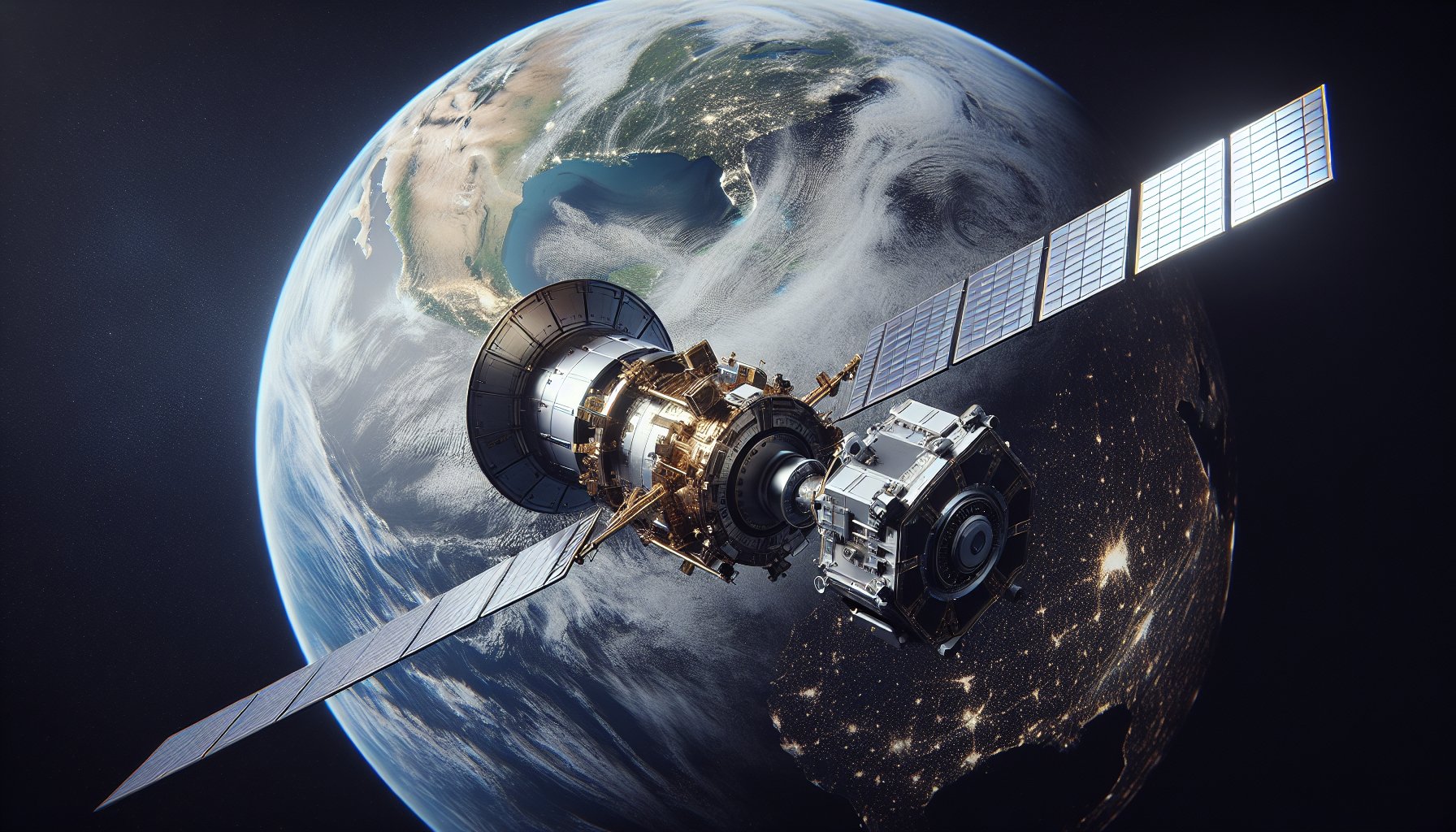
The geostationary communications satellite Amazonas Nexus, operated by the Spanish satellite operator Hispasat, encountered an anomaly in its power subsystem during October 2023, which preliminary investigations attribute to an impact from a micrometeoroid or orbital debris particle. This event, occurring mere months after the satellite's deployment to geostationary orbit (GEO), underscores the vulnerabilities inherent in spacecraft operating in the increasingly congested space environment, where the flux of sub-millimeter particles can impose significant risks to solar array efficiency and overall mission longevity. According to a report published by SpaceNews on October 25, 2023, the incident has necessitated operational adjustments, reducing the satellite's capacity while engineers assess mitigation strategies SpaceNews.
Background on Amazonas Nexus Satellite
Amazonas Nexus represents a high-throughput satellite (HTS) platform designed to provide broadband connectivity across the Americas, Atlantic corridor, and Greenland, leveraging Ka-band and Ku-band frequencies for enhanced data rates. Constructed by Maxar Technologies on the proven 1300-series bus, the spacecraft has a dry mass of approximately 2,000 kilograms and a launch mass exceeding 4,500 kilograms, with dimensions allowing for a stowed configuration compatible with the SpaceX Falcon 9 fairing. The satellite's power system relies on dual solar arrays, each comprising multi-junction gallium arsenide cells capable of generating over 10 kilowatts at beginning-of-life (BOL), supplemented by lithium-ion batteries for eclipse periods in GEO, where the orbital period synchronizes with Earth's rotation at an altitude of 35,786 kilometers Maxar Technologies.
Launched on February 7, 2023, from Cape Canaveral Space Force Station via a Falcon 9 Block 5 rocket, Amazonas Nexus achieved GEO insertion following a series of liquid apogee engine firings, which provided the necessary delta-v of approximately 1.5 kilometers per second to transition from geostationary transfer orbit (GTO) to its operational slot at 61 degrees West longitude. The satellite's payload includes digital signal processors enabling beam-forming and frequency reuse, supporting throughput capacities in excess of 150 gigabits per second, as detailed in Hispasat's technical specifications released prior to launch Hispasat. This configuration positions Amazonas Nexus as a successor to the Amazonas series, incorporating advancements in electric propulsion for station-keeping, which utilizes xenon ion thrusters with a specific impulse (Isp) of around 3,000 seconds to minimize propellant mass requirements over its projected 15-year operational lifespan.
Details of the Incident
In October 2023, telemetry data from Amazonas Nexus indicated a sudden degradation in the output of one solar array wing, manifesting as a voltage drop and reduced current generation, which compromised the overall power budget by an estimated 20-30 percent based on initial assessments. Hispasat engineers, in collaboration with Maxar, conducted diagnostic analyses that pointed to a hypervelocity impact from a space particle, likely a micrometeoroid measuring less than 1 millimeter in diameter, traveling at relative velocities exceeding 10 kilometers per second in GEO. Such impacts can penetrate solar cell coverglass and underlying photovoltaic materials, creating plasma discharges or physical disruptions that propagate through the array's string architecture, as evidenced by similar events documented in historical satellite anomalies NASA Orbital Debris Quarterly News.
Confirmation of the event emerged through public statements, with Hispasat acknowledging the anomaly in a press release on October 24, 2023, noting that while the satellite remains controllable and partially operational, the power shortfall has led to the deactivation of select transponders to prioritize critical services. Additional reporting from Via Satellite on October 26, 2023, corroborated these findings, citing industry sources who suggested the particle originated from natural micrometeoroid streams rather than anthropogenic debris, though definitive attribution remains challenging without post-impact forensic data Via Satellite. The incident did not result in loss of attitude control, as the satellite's reaction wheels and hydrazine thrusters maintained three-axis stabilization, preventing further orbital perturbations.
Technical Analysis of the Impact and System Response
From an engineering perspective, the vulnerability of solar arrays to micrometeoroid and debris impacts stems from their expansive surface area—typically exceeding 50 square meters when deployed—and the brittle nature of solar cell assemblies, which must balance efficiency with mass constraints. In the case of Amazonas Nexus, the arrays employ triple-junction cells with efficiencies approaching 30 percent under air mass zero (AM0) illumination, but hypervelocity impacts can induce cratering or vaporization effects that sever interconnects or create shunt paths, reducing the array's open-circuit voltage from nominal values of around 100 volts per string. Comparative data from the International Space Station (ISS) solar arrays, which have experienced over 100 documented impacts since 1998, indicate that particles as small as 0.1 millimeters can cause power losses of 1-5 percent per event, scaling with kinetic energy proportional to the square of velocity NASA Technical Report on ISS Solar Array Degradation.
Analysis of the Amazonas Nexus event reveals parallels with the 2013 anomaly on the Intelsat IS-19 satellite, where a solar array failure attributed to a debris strike halved power generation, necessitating payload curtailment. For Amazonas Nexus, the power subsystem's redundancy—incorporating parallel battery buses and autonomous fault detection—isolation-recovery (FDIR) algorithms—likely mitigated cascading failures, allowing the satellite to operate at reduced capacity while drawing from stored energy during peak demand. However, the long-term implications include accelerated battery depth-of-discharge cycles, potentially shortening the mission life from 15 years to 12-13 years if array repairs via onboard mechanisms prove infeasible. Electric propulsion systems, reliant on consistent power for ion thruster operation, may also face delta-v deficits, compromising north-south station-keeping maneuvers that require approximately 50 meters per second per year in GEO to counteract gravitational perturbations ESA Orbital Mechanics Reference.
Industry Implications and Risk Mitigation Strategies
This incident amplifies concerns regarding the sustainability of GEO operations amid rising orbital debris populations, with the European Space Agency (ESA) estimating over 36,000 objects larger than 10 centimeters and millions of sub-millimeter fragments in Earth orbits as of 2023 ESA Space Debris Report. For the satellite communications industry, which relies on GEO assets valued at billions of dollars, such events could escalate insurance premiums, already averaging 5-10 percent of spacecraft value for on-orbit coverage, as underwriters factor in heightened collision probabilities derived from models like NASA's ORDEM (Orbital Debris Engineering Model) NASA ORDEM.
Broader implications extend to spectrum allocation and service continuity, as Hispasat's clients in maritime, aviation, and remote connectivity sectors may experience bandwidth constraints, prompting shifts to alternative providers or constellations in low Earth orbit (LEO), such as Starlink, which mitigate GEO-specific risks through distributed architectures. Industry responses include advancements in shielding technologies, such as Whipple bumpers or self-healing polymers for solar arrays, though these add mass penalties that reduce payload fractions. Regulatory bodies, including the U.S. Federal Communications Commission (FCC), are advocating for enhanced debris mitigation guidelines, mandating end-of-life deorbiting maneuvers with at least 90 percent reliability to curb debris growth FCC Rules on Spacecraft Disposal.
Future Outlook and Recommendations
Looking ahead, the Amazonas Nexus recovery efforts may involve software patches to optimize power distribution or selective payload hibernation, potentially restoring 70-80 percent of nominal capacity within months, based on precedents like the SES-14 satellite's post-launch anomaly resolution in 2018. For future missions, incorporating radiation-hardened components and active debris avoidance systems—utilizing onboard radars or laser ranging for collision conjunction assessments—could enhance resilience, albeit at increased costs estimated at 5-15 percent of total program budgets RAND Corporation Report on Space Debris Mitigation.
In conclusion, the Amazonas Nexus incident serves as a data point for refining probabilistic risk assessments in spacecraft design, emphasizing the need for interdisciplinary approaches combining materials science, orbital dynamics, and systems engineering to safeguard the expanding space economy, projected to reach $1 trillion by 2040 according to industry analyses Morgan Stanley Space Economy Report.


