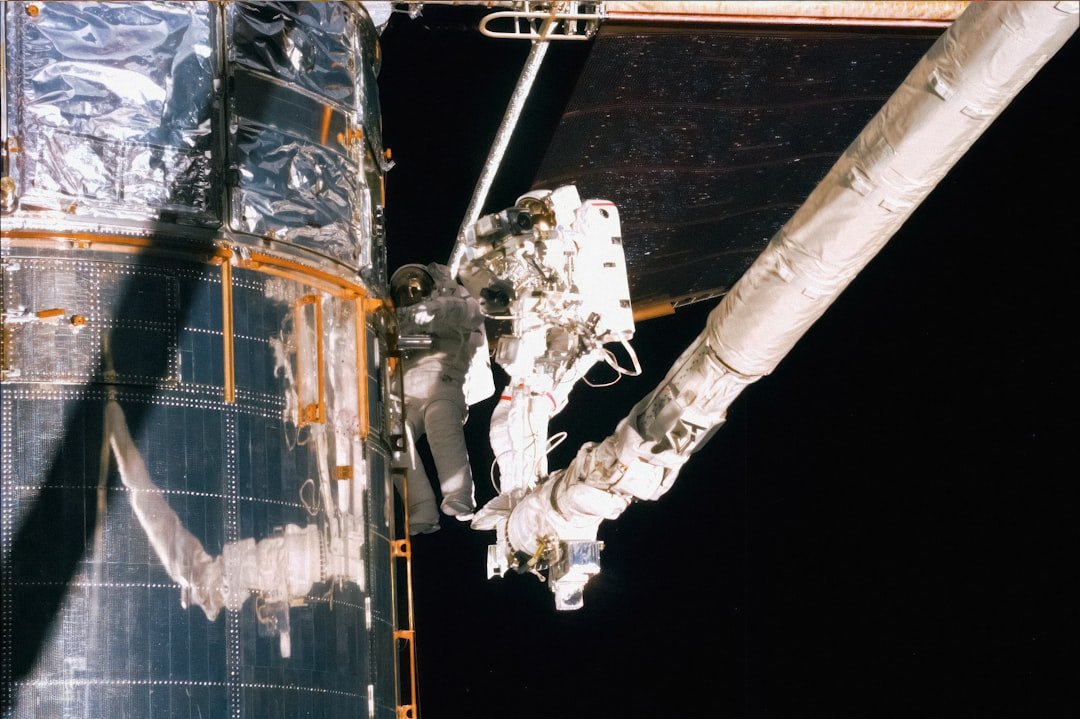
In the vast silence of space, a single health scare can shatter the rhythm of a mission. That's exactly what happened to NASA's Crew-11, forcing an unprecedented early return from the International Space Station (ISS). Today, the astronauts will share their gripping tale at a live press conference from NASA's Johnson Space Center in Houston, starting at 2:15 p.m. EST. Tune in via NASA's website or YouTube channel to hear firsthand accounts of a drama that unfolded 250 miles above Earth.
A Race Against the Unknown
The Crew-11 mission, launched in early August 2025 aboard SpaceX's Crew Dragon capsule, was meant to span 6.5 months of experiments and orbital living. Instead, it ended abruptly after 167 days when an undisclosed medical issue struck one unnamed astronaut. This marked the first medical evacuation from the ISS since humans began continuously inhabiting the station in November 2000—a sobering reminder that even in the high-tech cocoon of space, the human body remains fragile.
The four-person team—commander Mike Fincke and Zena Cardman from NASA, Kimiya Yui from Japan's JAXA, and Oleg Platonov from Russia's Roscosmos—undocked on January 14 and splashed down in the Pacific Ocean off San Diego at 3:41 a.m. ET the next day. Recovery crews, deploying helicopters and boats in the pre-dawn chill, whisked them away for immediate medical checks before a flight to Houston. NASA reports all are safe, with the affected astronaut stable and undergoing postflight reconditioning. "It's so good to be home!" Cardman exclaimed as she emerged from the capsule, her words captured by BBC reporters amid the jubilant chaos of recovery.
Tech That Saved the Day
What turned potential catastrophe into a controlled descent? A portable ultrasound machine aboard the ISS played a starring role, enabling real-time diagnostics and consultations with Earth-bound doctors. "It really helped," NASA officials understated in previews, but the device's impact underscores a leap in orbital telemedicine. Astronauts are expected to spotlight this gadget during today's briefing, highlighting how it bridged the void between space and specialist care.
This wasn't just luck; it was the payoff of evolving emergency protocols. Past ISS crews have tackled everything from minor surgeries to vision impairments without leaving orbit. But here, the urgency demanded action. The SpaceX Crew Dragon's flexibility shone through, allowing a swift exit without waiting for the next rotation— a testament to commercial spacecraft's agility in crisis.
The Human Toll of Space
Long-duration spaceflight is no gentle cruise. Radiation bathes the body, microgravity redistributes fluids in ways that can wreak havoc, and isolation amplifies every ache. NASA experts point to these risks as the backdrop for Crew-11's ordeal, a stark contrast to the station's 25-plus years of unbroken human presence. Now, with the crew home, the ISS hums along with a skeleton team of three: NASA's Chris Williams and Roscosmos cosmonauts Sergey Kud-Sverchkov and Sergei Mikayev. They're holding the fort until Crew-12 arrives later this year, as plans extend the station's life through 2030 amid a shift to private outposts like Axiom and Starlab.
Despite geopolitical storms on Earth—including the war in Ukraine—international collaboration held firm. NASA, SpaceX, JAXA, and Roscosmos pulled off the mission's objectives without major hitches, even with the shortened timeline. Administrator Bill Nelson lauded the effort, emphasizing crew safety as the unyielding priority.
Lessons for the Stars
Today's press conference isn't just a debrief; it's a window into spaceflight's future. The astronauts will recount highlights—from zero-gravity experiments to the rhythms of daily life—while NASA teases updates on the health issue, balanced against privacy concerns. Expect questions to probe the evacuation's ripple effects, especially for ambitious ventures like Artemis moon missions or Mars treks, where "coming home early" isn't an option.
This precedent sharpens the focus on advanced in-orbit medicine. Trainers are already eyeing Crew-11's rapid decisions and ultrasound prowess to refine astronaut prep, while SpaceX executives celebrate the Crew Dragon's flawless performance since its 2020 debut. As space policy analysts note, incidents like this propel innovations that could one day sustain explorers on distant worlds.
A full mission report is slated for release in the coming weeks, promising deeper insights. For now, as the Crew-11 team steps into the spotlight, their story reminds us: in the quest to conquer the cosmos, resilience isn't just about machines—it's about the beating hearts they carry. Catch the live stream at nasa.gov/live or NASA's YouTube channel, complete with a Q&A session. An archived version will follow for those who miss the orbit-altering moment.


