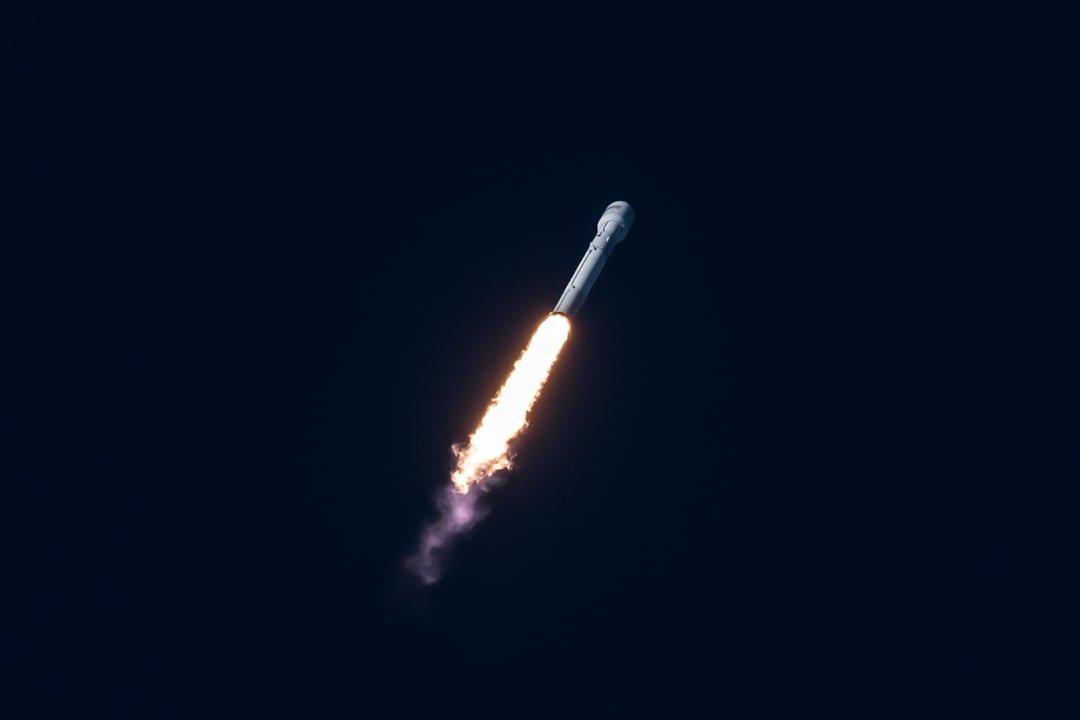
In the rugged expanse of California's central coast, where fog-shrouded hills meet the Pacific's relentless waves, Vandenberg Space Force Base has long stood as a quiet sentinel of the stars. But a recent move by the U.S. Space Force could jolt this sleepy giant back to life, transforming a dormant corner into a powerhouse for the nation's heaviest rockets. On December 29, 2025, the Space Force issued a request for information, inviting U.S. rocket manufacturers to explore developing a heavy or super-heavy launch facility at Space Launch Complex-14. Nestled in the base's southernmost reaches, known as Sudden Flats, this site promises vertical launches of behemoths that could redefine America's space ambitions.
Boosting National Security Through Diversification
The push isn't just about bigger booms—it's a strategic play for resilience. By spreading launch capabilities across the country, the U.S. aims to dodge the pitfalls of relying on a single site: anomalies that ground fleets, work stoppages that halt progress, or supply chain snarls that delay missions. Under a public-private partnership, manufacturers would lease the idle pad, designing, building, operating, and maintaining the infrastructure themselves. It's a model that echoes the Space Force's broader vision of agile, distributed space operations.
Yet, not everyone is ready to cheer. Rep. Salud Carbajal, the Democrat representing California's 24th District, fired off a letter on January 13, 2026, to Air Force Secretary Troy Meink and Space Force Chief of Space Operations Gen. Chance Saltzman. In it, he pressed for a thorough assessment of the environmental, community, and operational ripple effects. "The nation benefits from diverse launch systems at VSFB to mitigate the impact of vehicle/infrastructure anomalies, work stoppages and supply chain disruptions," the Space Force's request noted, as reported by Noozhawk. Carbajal, while nodding to the base's economic boon for the region, highlighted the dizzying pace of recent expansions and urged caution.
SpaceX's Parallel Push and Vandenberg's Vast Canvas
This isn't Vandenberg's only stirrings. SpaceX, the indefatigable innovator, is ramping up at nearby Space Launch Complex-6. In May 2025, the company unveiled a draft environmental impact statement for upgrades, including two new landing pads to handle Falcon 9 and Falcon Heavy rockets. The goal? Doubling the launch rate from 50 to 100 per year, turning the site into a veritable spaceport hub.
Sprawling across 118,000 acres with 46 miles of pristine coastline, Vandenberg is no stranger to ambition. Officials snapped up the 14,900-acre Sudden Flats in 1966 from the old Sudden Ranch, carving out a niche in polar and sun-synchronous orbits. These paths, arcing safely over the ocean, offer a stark contrast to the crowded, weather-plagued equatorial shots from Florida's Cape Canaveral. The new facility would target massive military satellites and rapid-response missions—think systems rivaling or surpassing the Falcon Heavy, ready to deploy in crises.
From Lull to Liftoff: A Base in Transition
Vandenberg's story has its ebbs. Back in 2019, the base managed just five launches, three for satellites, amid tepid demand for polar orbits. "We are having a lull... Demand for polar orbits is just not that high," Col. Michael Hough, then-commander of the 30th Space Wing, told SpaceNews. But winds are shifting. Relativity Space inked a 2020 deal to build a pad for its Terran 1 rocket, courting clients like Iridium for those specialized orbits. It's part of a deliberate courtship of private players, overseen by Space Launch Delta 30.
The base's accolades stack up—awards for excellence in 2025 underscore its defensive prowess, per its official site. Still, broader pressures loom: East Coast congestion heightens risks from storms and traffic, while global upheavals, like the Ukraine war and Boeing's Starliner delays, expose vulnerabilities in U.S. space architecture. Diversifying to the West Coast isn't just smart—it's essential for countering rivals like China and Russia, who are surging ahead in orbital dominance, defense analysts warn.
Weighing the Impacts and Eyeing the Horizon
Carbajal's concerns aren't abstract. His letter, quoted in the Lompoc Record, calls for evaluating how a super-heavy facility might shake local communities, ecosystems, and base operations amid already surging activity. Environmental reviews, mandated by federal rules, would scrutinize any development at Space Launch Complex-14, which currently sits idle for heavy-lift duties.
No company responses to the request have surfaced publicly, but the move fits a pattern of revitalization. Past tenants like United Launch Alliance have leveraged Vandenberg's prime position for surveillance and communications satellites, hurling payloads into orbits that keep watch from on high.
As Vandenberg shakes off years of market-driven dormancy, this initiative could mark a turning point. By forging fresh partnerships, the base isn't just expanding—it's fortifying America's grip on the cosmos, one thunderous launch at a time. In an era of escalating space rivalries, such bold steps might be exactly what keeps the stars and stripes flying high.


