Rocket Lab Launches South Korean Disaster-Monitoring Satellite After Delay
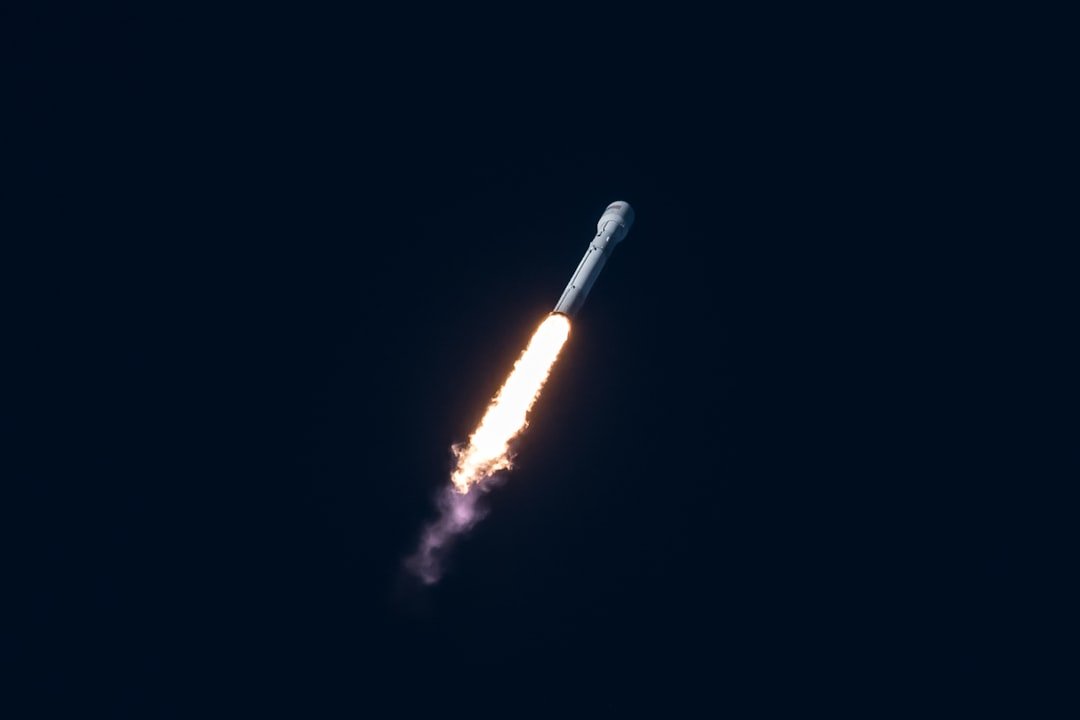
WELLINGTON, New Zealand (AP) — Rocket Lab launched its 81st Electron rocket from New Zealand on Jan. 30, 2026, deploying South Korea's NEONSAT-1A satellite into orbit. The mission, named "Bridging the Swarm," occurred at 2:21 p.m. local time from Launch Complex 1 on the Mahia Peninsula, following a six-week delay from an initial attempt in December 2025.
The satellite, built by the Korea Advanced Institute of Science and Technology's (KAIST) Satellite Technology Research Center, aims to monitor natural disasters and national security over the Korean Peninsula, according to South Korea's Ministry of Science and ICT, which funded the project. It is the first in a planned constellation of microsatellites. Rocket Lab deployed the payload into a 540-kilometer sun-synchronous low Earth orbit using the rocket's kick stage.
The December attempt aborted at engine ignition due to an out-of-family sensor reading, officials said. Rocket Lab described the fix as straightforward in a company update. "One of Electron’s thousands of sensors noticed out-of-family data and called time on lift-off, exactly as it was designed to do," the company stated, according to spaceflightnow.com.
This launch marked Rocket Lab's second Electron mission in eight days, after a previous flight. The company achieved a record number of launches in 2025, sources indicate. The 59-foot-tall Electron rocket uses Rutherford engines with sensor systems for automated aborts.
NEONSAT-1A provides near-real-time Earth observation and imaging capabilities, per KAIST descriptions. It targets disaster response in a region prone to seismic and volcanic activity, as well as geopolitical tensions. The ministry highlighted the mission's role in advancing indigenous space technology.
The launch aligns with broader trends in small satellite constellations for Earth monitoring, experts note. Rocket Lab's high-cadence schedule supports dedicated launches for international customers, including governments. The company operates from sites in New Zealand and the United States.
Sources confirm the orbit insertion succeeded, based on Rocket Lab's mission success announcement. No immediate post-deployment status updates on satellite signal acquisition appeared in available reports. The NEONSAT constellation's full timeline and size remain unspecified in public statements.
Rocket Lab's recovery from the abort demonstrates system reliability, according to industry observers. The mission builds on South Korea's recent space achievements, such as the Nuri rocket's successes. KAIST funded the satellite development through government grants.
The Electron rocket carried the NEONSAT-1A nanosatellite as its primary payload. Exact mass and dimensions were not detailed in sources. The launch window opened at 8:21 p.m. EST on Jan. 29, 2026, equivalent to 1:21 a.m. GMT on Jan. 30.
Rocket Lab officials noted the abort system's performance prevented potential issues. The company has conducted 81 Electron flights overall, contributing to an aggressive 2026 schedule. South Korea's involvement reflects growing international partnerships in small satellite deployments.
No contradictions emerged across multiple sources on launch success, payload purpose or delay causes. Minor date variations stem from time zone differences, reports show.
The mission underscores Rocket Lab's role in the small satellite launch market. The company provides launch-as-a-service options amid increasing demand from Asia and elsewhere. South Korea's Ministry of Science and ICT oversees funding for such projects to enhance national capabilities.
KAIST's SaTReC lab specializes in satellite technology research. The NEONSAT series focuses on swarm technology for constellation operations, testing initial elements for real-time monitoring.
Rocket Lab's stock, traded as RKLB, may see investor interest from the high launch rate, per financial reports. The company did not disclose the contract value. U.S. export controls apply to security-related payloads, but no issues were reported.
Sources including space.com and Rocket Lab updates provided consistent details on the orbit and deployment. The mission occurred days ago, as of early February 2026, with no further updates on satellite performance.
This event follows Rocket Lab's end-2025 push for rapid launches across its pads. The company completed three Electron missions in quick succession late last year, setting a record pace. NEONSAT-1A's deployment advances South Korea's space ambitions in Earth observation.
Industry parallels include other constellations for disaster monitoring, such as those using synthetic aperture radar. Rocket Lab's Electron supports responsive space needs in critical sectors, contributing to global efforts in near-real-time imaging technology.
No independent tracking data confirmed orbit details beyond company statements. The root cause of the sensor anomaly resolution was not specified beyond the "straightforward" description. Future NEONSAT satellites will expand the constellation's coverage, according to ministry plans.
Rocket Lab operates Launch Complex 1 in New Zealand for international missions, hosting multiple Electron flights since 2017. This launch reinforces the company's position in the competitive small rocket market.
South Korea's space program has grown with domestic rocket developments. The Nuri launcher achieved orbital success in recent years, enabling projects like NEONSAT. KAIST collaborates with government agencies on satellite initiatives.
The "Bridging the Swarm" mission name reflects the constellation's design. Rocket Lab's kick stage performed the final orbit insertion after main stage separation. Sensors on the Rutherford engines monitor performance in real time.
No visual confirmations of initial satellite imagery were available. The launch video, provided by Rocket Lab, showed nominal ascent and deployment. This mission highlights recovery processes in commercial spaceflight.
Rocket Lab plans additional launches in 2026 to maintain cadence. South Korea's investment in NEONSAT supports national security and disaster preparedness. The satellite operates in low Earth orbit for optimal imaging resolution.


